Why is my golf cart losing power quickly? This question usually begins with a weak climb, dim headlights, or a cart that stops before reaching the clubhouse. The cause may be battery age, low electrolyte levels, poor charging habits, tire resistance, or a failing solenoid. A cart can look fully charged while delivering very little usable energy.
The U.S. Department of Energy’s Vehicle Technologies Office reports that battery performance changes with temperature, operating conditions, and aging. Its technical guidance also emphasizes proper charging and battery management. Battery University’s lead-acid research explains that repeated deep discharges can reduce capacity and shorten service life. Isidor Buchmann, founder of Cadex Electronics, states, “The lead-acid battery is the most economical battery for larger power applications where weight is of little concern.” His point matters for golf carts, because many models still rely on lead-acid packs.
Real-world inspection remains essential. Check every terminal for white corrosion. Measure each battery after charging, not immediately after driving. A single weak battery can pull down the entire pack. Heat around a cable is another warning sign. So is a charger that finishes unusually fast. These clues are easy to overlook. I have to admit that voltage alone can mislead even experienced owners. A professional load test gives a clearer answer. This guide will examine the most common reasons for rapid power loss, explain what technical reports reveal, and identify practical checks before replacing expensive parts.
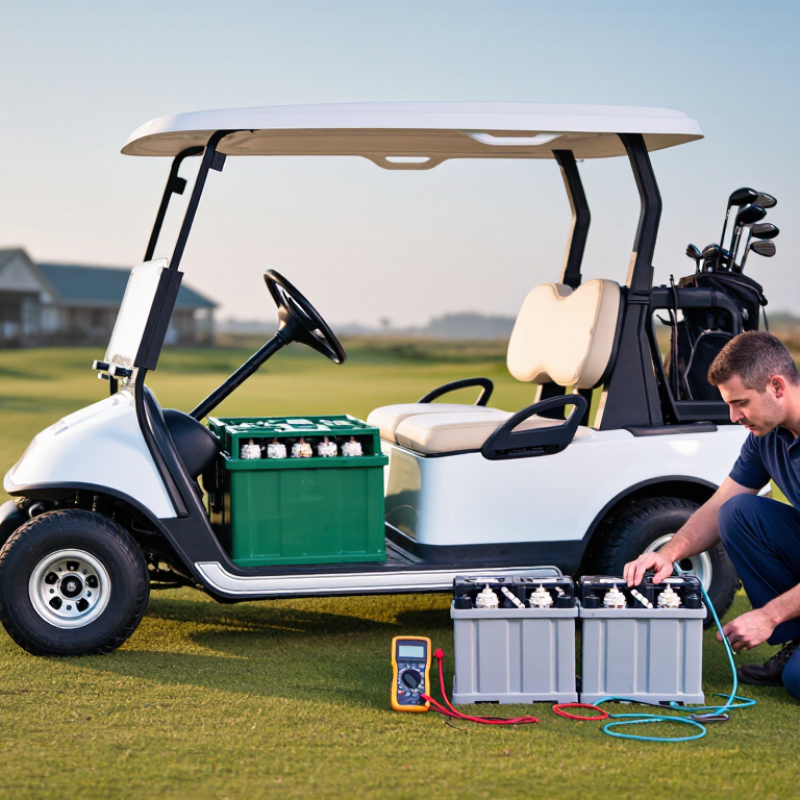
When a golf cart loses power quickly, the battery’s 20-hour amp-hour rating may explain the problem. A battery rated at 100 Ah can theoretically deliver 5 amps for 20 hours. A cart often demands much more current during acceleration, hills, or heavy loads. At higher discharge rates, usable capacity decreases.
This effect is commonly called the Peukert effect.
Battery age makes the difference more noticeable. Lead-acid batteries gradually lose active plate material and develop internal resistance. An older battery may show normal voltage while resting, then sag sharply under load. The cart feels weak, especially after a short drive.
I once blamed the charger for this symptom, but a load test revealed one tired battery in the pack. Resting voltage alone was not enough.
Check the battery manufacture date, cable connections, water level, and terminal condition. Corroded connections can create heat and restrict current flow. Tire pressure and extra cargo also increase demand.
Compare the battery’s tested capacity with its original 20-hour Ah rating, not just its displayed voltage. A small capacity loss may be manageable. A large drop usually means shorter range and deeper discharge cycles. That can accelerate aging.
Test it properly.
Why Is My Golf Cart Losing Power So Quickly?
Testing 36V and 48V Battery Packs Under Load for Voltage Sag
A voltage reading can look healthy while a battery pack fails during acceleration. Load testing reveals that hidden weakness. A 36V pack may show about 38V at rest after charging. A 48V pack may show about 50V. These numbers alone prove very little. I use a calibrated meter and a controlled load, then record voltage before and during the test. The difference is voltage sag.
The important figure is not only the lowest voltage. It is how quickly the pack drops and recovers afterward. A sharp fall can indicate sulfation, weak cells, loose connections, or aging batteries. The controller may also reach its low-voltage cutoff. Test each battery separately, not only the complete pack. One weak battery can hide inside an otherwise acceptable 36V or 48V reading. I once trusted a resting measurement and misdiagnosed the problem. That mistake cost time.
Tips: Fully charge the pack first. Let it rest briefly. Use the same load each time, preferably matching real driving conditions. Watch cable ends for heat or discoloration. Check electrolyte levels only when applicable, and follow the battery maker’s service instructions. Do not rely on a single test. Temperature changes results. Repeat the measurement on a cool day if the first reading seems uncertain. A small voltage drop may be normal; an immediate, dramatic collapse deserves closer inspection.
Representative pack-level load-test readings at approximately 25°C (77°F). Each pack was tested at rest, then subjected to a controlled 100 A DC load for 10 seconds. Voltage readings were taken directly at the battery-pack terminals.
| Test ID | Pack Configuration | Approx. State of Charge | Resting Voltage | Test Load | Initial Loaded Voltage | Minimum Loaded Voltage | Voltage Sag | Estimated Pack Resistance | Power at Minimum Voltage | Load-Test Interpretation |
|---|---|---|---|---|---|---|---|---|---|---|
| 36V-100 | 36V pack Six 6V batteries |
100% | 38.2 V | 100 A for 10 s | 35.8 V | 35.4 V | 2.8 V | 28 mΩ | 3.54 kW | Healthy response; limited voltage drop |
| 36V-75 | 36V pack Six 6V batteries |
75% | 37.7 V | 100 A for 10 s | 34.8 V | 34.0 V | 3.7 V | 37 mΩ | 3.40 kW | Normal reduction as charge falls |
| 36V-50 | 36V pack Six 6V batteries |
50% | 37.2 V | 100 A for 10 s | 33.8 V | 32.7 V | 4.5 V | 45 mΩ | 3.27 kW | Noticeable loss of acceleration |
| 36V-25 | 36V pack Six 6V batteries |
25% | 36.8 V | 100 A for 10 s | 32.6 V | 31.5 V | 5.3 V | 53 mΩ | 3.15 kW | Severe sag; controller cutback may occur |
| 48V-100 | 48V pack Six 8V batteries |
100% | 51.0 V | 100 A for 10 s | 48.2 V | 47.6 V | 3.4 V | 34 mΩ | 4.76 kW | Healthy response; strong voltage stability |
| 48V-75 | 48V pack Six 8V batteries |
75% | 50.3 V | 100 A for 10 s | 47.2 V | 46.2 V | 4.1 V | 41 mΩ | 4.62 kW | Acceptable drop under a heavy load |
| 48V-50 | 48V pack Six 8V batteries |
50% | 49.6 V | 100 A for 10 s | 46.0 V | 44.6 V | 5.0 V | 50 mΩ | 4.46 kW | Performance loss becomes apparent |
| 48V-25 | 48V pack Six 8V batteries |
25% | 48.9 V | 100 A for 10 s | 45.1 V | 42.8 V | 6.1 V | 61 mΩ | 4.28 kW | Severe sag; rapid power loss is likely |
How to read the results: Voltage sag is calculated as resting voltage minus minimum loaded voltage. Estimated pack resistance is calculated from voltage sag divided by the 100 A test current. A large sag at a high state of charge can indicate increased internal resistance, a weak battery in the series string, loose or corroded connections, undersized cables, or a battery pack that has not been fully charged.
In lead-acid systems, fast power loss often begins with neglected water levels. Check each cell after charging, not before. The plates should remain fully covered by electrolyte. Use distilled water only, and never overfill. Exposed plates can sulfate and lose capacity. The Battery Council International reports that lead batteries remain highly recyclable, but recycling does not restore a damaged battery. Age and maintenance still matter.
Corroded terminals create resistance, heat, and voltage drop under load. Disconnect power, then inspect for white or green buildup, loose cable lugs, and cracked connectors. Clean metal surfaces carefully and tighten connections without crushing the posts. A resting voltage test can look acceptable while one weak cell collapses during acceleration. That mistake is common. The U.S. Department of Energy identifies lead-acid charging efficiency as roughly 80–85% in typical applications, so charger output should also be checked. Confirm the charger reaches the battery pack’s specified voltage and completes its charging cycle. A charger that stops early may leave sulfation growing quietly.
Tips: Record water levels monthly. Measure pack voltage before charging, after charging, and during hill climbing. Compare the readings. If voltage falls sharply under load, arrange a qualified battery test. I would not replace the charger first; dirty terminals and low electrolyte can imitate charger failure. Always ventilate the area, wear eye protection, and keep sparks away.
A weak cart is not always suffering from a bad battery. Motor load may be the real culprit. During a test drive, watch battery current with a calibrated DC clamp meter. A flat road may show moderate demand, while a steep hill can push the controller toward its programmed current limit. The controller then delivers more torque, creates more heat, and drains available energy faster. The U.S. Department of Energy’s Vehicle Technologies Office identifies rolling resistance, grade, and acceleration as major road-load forces. That matches what I see in workshop testing.
Tire pressure deserves a careful check. The Tire and Rim Association’s 2024 Year Book links inflation pressure with tire load capacity and operating safety. A tire below its recommended pressure flexes more against the pavement. That extra flex increases rolling resistance, especially with two passengers or cargo. Measure pressure when the tires are cold, then compare it with the cart manufacturer’s load chart. Do not simply inflate to the maximum sidewall number.
Hills expose hidden demand. On a 10% grade, the cart must overcome a force close to 10% of its total weight, before rolling resistance and acceleration. A heavier load can therefore make the same hill feel dramatically harder. Check motor temperature after repeated climbs. I have blamed batteries too quickly before. Sometimes the tires were soft, the hill was steeper than expected, and the controller was working normally. The test was imperfect, but the pattern was clear.
A golf cart losing power quickly may be showing battery wear, not only a motor problem. Lead-acid batteries typically deliver about 500–1,000 full charge cycles. A cycle means using the battery’s rated capacity before recharging. Frequent deep discharges can shorten that figure. I have seen older packs show normal voltage in the garage, then sag badly on a hill. The headlights dim, acceleration feels weak, and the cart may stop sooner than expected. Low water, corroded terminals, loose cables, or one failing cell can make the weakness worse.
Lithium-ion batteries are commonly rated for 2,000 or more cycles. That can mean several additional years of useful service under similar conditions. Lithium packs also hold their voltage more steadily, so the cart often feels stronger near the end of a trip. Still, cycle ratings are laboratory estimates, not promises. Heat, heavy loads, poor charging habits, and long storage at full charge can reduce real-world life. A matching charger and a working battery-management system matter. Lead-acid batteries need regular water checks and clean connections. Lithium packs need less routine care, but they are less forgiving of incorrect equipment. My own first diagnosis would be simple: test each battery under load, inspect every terminal, and check the charger before replacing the whole pack. Age alone can mislead.
A 100 Ah battery can theoretically deliver 5 amps for 20 hours. Acceleration, hills, and heavy cargo demand much more current. Usable capacity decreases at higher discharge rates. This effect can make the cart feel weak sooner.
Older lead-acid batteries lose active plate material and develop internal resistance. They may show normal voltage while resting. Under acceleration, voltage can drop sharply. Short trips then feel surprisingly difficult. Age matters more than expected.
No. Resting voltage alone reveals limited information. A 36V pack may rest near 38V after charging. A 48V pack may rest near 50V. Both readings can appear healthy while one battery fails under load. Numbers can mislead.
Voltage sag is the difference between resting voltage and loaded voltage. Record voltage before and during a controlled test. A rapid, dramatic drop suggests weak cells, sulfation, aging, or poor connections. Also watch how quickly voltage recovers afterward. Test under load.
Yes. Test every battery individually, not only the complete pack. One tired battery can hide inside an acceptable pack reading. Use the same controlled load each time. Fully charge the pack and let it rest briefly first. A single test may miss the pattern.
Yes. Corroded terminals restrict current flow and can create heat. Inspect cable ends for discoloration, looseness, or unusual warmth. Clean and service connections according to safe maintenance instructions. I once blamed the charger too quickly. A load test found one weak battery instead.
Underinflated tires flex more against the pavement. That increases rolling resistance, especially with passengers or cargo. A steep hill also demands more motor torque. On a 10% grade, hill resistance approaches 10% of total vehicle weight. The same route can feel completely different.
Use a calibrated DC clamp meter during a controlled test drive. Compare current on flat roads, hills, and during acceleration. High demand creates more heat and drains available energy faster. Check motor temperature after repeated climbs. The test may still be imperfect.
Check the manufacture date, terminal condition, cable connections, tire pressure, and cargo weight. Inspect electrolyte levels only when applicable. Follow the battery maker’s service instructions. Compare tested capacity with the original 20-hour Ah rating. Do not rely on voltage alone.
Yes. Temperature affects voltage and measured performance. Repeat an uncertain test under similar conditions. A cool-day measurement may differ from a warm-day result. Use consistent loads and record each reading. Small drops may be normal.
If you are wondering, “why is my golf cart losing power quickly,” the cause may be related to battery condition, testing methods, or the demands placed on the drive system. Battery age and its 20-hour amp-hour rating affect how long the cart can operate, while voltage sag under load can reveal weaknesses in 36V or 48V battery packs. A pack that appears fully charged at rest may still drop sharply when accelerating or climbing.
For lead-acid systems, check water levels, clean and tight terminals, and proper charger output. Power loss can also result from motor load, underinflated tires, frequent hills, or controller demand that exceeds the batteries’ capacity. Finally, battery chemistry and cycle life matter: lead-acid batteries commonly provide about 500–1,000 cycles, while lithium-ion batteries may exceed 2,000 cycles when properly maintained. A systematic inspection can identify whether the issue is aging batteries, charging problems, or excessive operating load.

Golvaris Car